

Product management requires a healthy mix of getting things done while being strategic. How to be a more strategic product manager is a common topic of discussion among early to mid-level product managers. If you struggle with being more strategic, this article is for you.
Many product managers feel stuck at a time when they most need to take action. “I just don’t have the time” they proclaim, rather than scheduling customer interviews that will help them decide which features to build. Or they can’t decide which features or bugs their team should work on. “I don’t have time to dig into the data and make these decisions because I’m in so many meetings.”
Does this sound like you? If so, you’re not alone.
Strategic product management is a skill you’ll need to develop if you’d like to advance in your product manager career.
Seth Godin, the best-selling author of Purple Cow, Tribes, and This is Marketing, wrote about the fallacy of writers’ block, saying, “Plumbers don’t get plumbers’ block.” Why is that? Plumbers know they’re hired to do the job, so they don’t sit around looking at a clogged sink waiting for inspiration to strike.
I think this analogy can also apply to product managers. I see many product managers wondering how to manage their backlogs or not spending time with their stakeholders because they’re not sure how to deal with all of those sometimes conflicting opinions. So they just don’t do it.
You have to take control of your time. You are a product manager. Manage your product and stop wasting your time on things that don’t move the needle.
Ready for the silver bullet? Sorry, there isn’t one. We all have 24 hours in a day and often find ourselves at 6 p.m. wondering where the day went and why we didn’t get more done.
The key to being a more strategic product manager is managing your time.
“A 40 hour time-blocked work week, I estimate, produces the same amount of output as a 60+ hour work week pursued without structure.”
Cal Newport, Author of Deep Work
The technique I’ve found to be most effective is time-blocking. I love time-blocking because it promotes focused, deep work, which is essential to strategic product management!
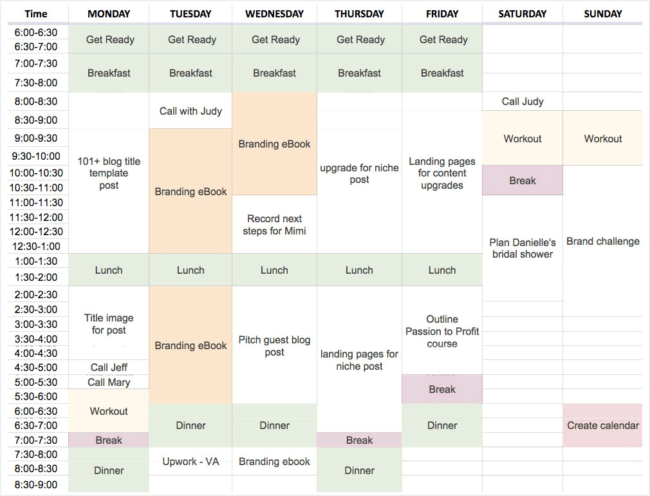
Block your time effectively with these 5 steps:
- Fire up your favorite Spotify playlist, grab a cup of coffee, and get ready to take control of your days!
- Review your OKRs for the month, quarter, and/or year. If you’re not using OKRs (oh, the horror!), hopefully, you have goals that you aspire to reach. You always want to start by thinking about the most important strategic areas that you, as a product manager, should focus on.
- Using these OKRs as your navigational system guiding you to where you need to be in order to be most successful, break things down into smaller activities. For example, if your goal is to become more strategic in how you make product decisions, you could set aside 2 hours every Tuesday afternoon for the next month to research different prioritization frameworks, experiment with different frameworks, and select one that you can use moving forward to help you prioritize your backlog.
- Open your calendar app and plot these activities on your calendar. There’s no need to be granular. Try a one-hour block for checking email in the morning and late afternoon. Add a two-hour block for anything writing-related. Add four hours for customer insights. Get the picture?
- Pro tip: Use a different color for each type of activity. This helps you see the bigger picture of how you’re spending your time. Doing so will help you find your blind spots.
Here’s a list of common product manager activities you can batch:
- Checking email
- Meetings with stakeholders
- Writing user stories
- Talking to customers
- Creating product briefs
- Updating the roadmap
At this point, you may be skeptical. All product managers tend to be reactive and deal with fire drills on an almost daily, if not hourly, basis.
If you are the only product manager at a start-up, you may be expected to handle incoming customer support issues and write tickets for your team in near real-time. This is when time management is really critical!
Let me tell you what happened to me a few years ago.
I found myself stuck and unable to make progress in hiring. The company I worked for was a start-up that had finally hit the growth stage, and the number of employees needed to double within a year. I needed to hire new product managers to scale the product organization so that we could harness this growth opportunity.
The problem was that I didn’t take the time to review the resumes that the recruiter sent me, nor was I finding time to do phone screens. Weeks went by without a single interview.
I realized I had to take action and take control of my time so that I was spending it on the things that matter the most.
I started time-blocking. By using a different color specifically for recruiting new hires, I could look at my week confident that I was going to spend at least 4 hours working towards my goal of hiring a new PM within the next 60 days.
According to Cal Newport, there is still a great advantage to blocking out your time.
“Periods of open-ended reactivity can be blocked off like any other type of obligation. Even if you’re blocking most of your day for reactive work, for example, the fact that you’re controlling your schedule will allow you to dedicate some small blocks (perhaps at the schedule periphery) to deeper pursuits.”
In other words, even the smallest amount of control you can get over your schedule will help you become a better product manager.
I challenge you to try time-blocking as a tactic to become more strategic.
After 2 weeks of managing your time more effectively, I bet you’ll feel more productive and confident that you’re helping your company build better products, which is what it’s all about.
Like this post? Here are a few others you’ll enjoy:
3 comments