

You know what they don’t tell you when you become a product manager?
It’s not just about the roadmap, or the backlog, or hitting those OKRs.
It’s about people. Leading them. Listening to them. And yes — showing up with empathy, even when you’d rather sprint your way out of a tough conversation.
Today I want to share why empathy isn’t a nice-to-have. It’s your secret weapon. And how you can start using it right now without losing your backbone.
Empathy Isn’t Agreement — It’s Acknowledgment
I once had a conversation with a PM who said, “I’m tired of being expected to coddle people. I have a job to do.”
I get it. Your plate’s full, the prioritization pressures are intense, and stakeholders are breathing down your neck.
But here’s the thing: empathy doesn’t mean you’re agreeing with someone. It means you’re acknowledging them. You’re recognizing that their input is valid — even if you ultimately go in a different direction.
This isn’t about being nice. It’s about building trust. When your team or your stakeholders feel like you actually see them, they’re far more likely to work with you, not against you.
You Can Be Empathetic Without Being a Push-Over
Being empathetic doesn’t mean you say yes to everything. It means you care enough to listen and respond with thoughtfulness.
Here’s a simple script I often use:
“I hear where you’re coming from. That’s a valid concern. Let’s figure out how we can move forward.”
Short. Direct. Kind. And still clear that you’re leading the conversation.
The LEAP Framework: Your Empathy Toolkit
So how do you actually practice empathy in the moment, especially when tensions are high?
Let me introduce you to the LEAP Framework.
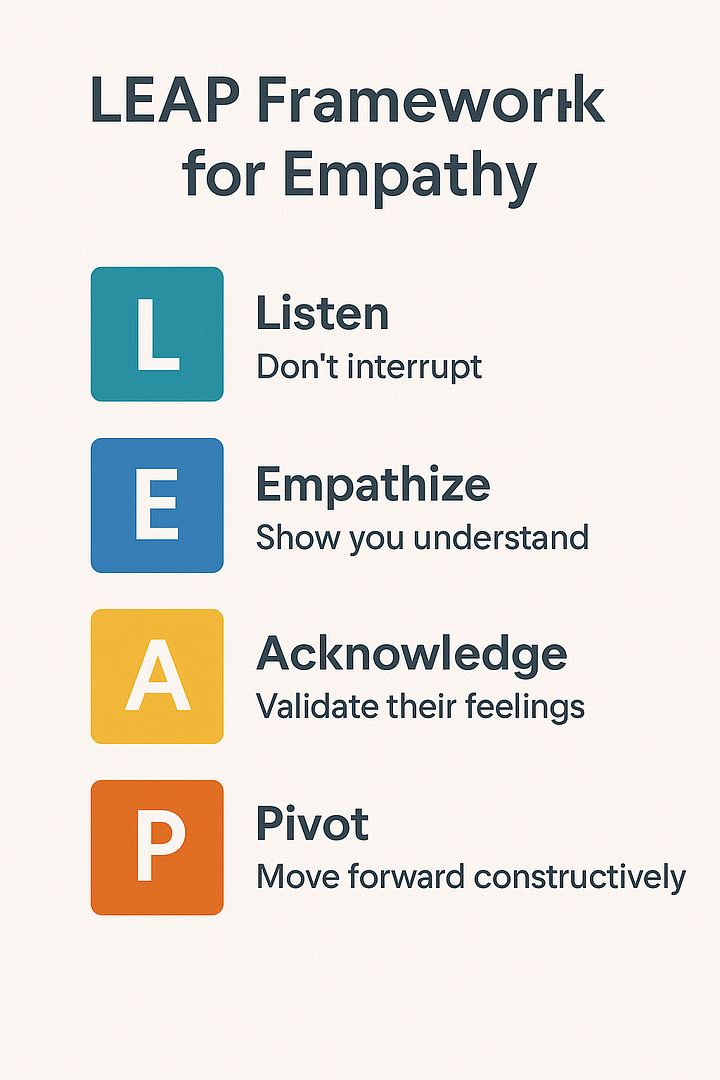
What is LEAP? Here’s the quick version:
L – Listen
Don’t interrupt. Don’t jump in to solve yet. Just listen, fully.
Example: In a planning meeting when an engineer’s venting about scope creep, hold back and let them get it out.
E – Empathize
Show you get how they’re feeling. Reflect it back.
“It sounds like you’re frustrated because the timelines keep shifting — makes sense.”
A – Acknowledge
Recognize the emotion and experience, even if you don’t agree with their reasoning.
“That must be draining. Thanks for sticking with it.”
P – Pivot
Move forward. Don’t stay stuck in the emotion.
“What’s one thing I can do right now to make this easier for you?”
I use LEAP when walking into stakeholder updates, 1:1s, or retros that feel like they might take a turn. It works because it honors the human on the other side of the table while keeping the conversation productive.
Stakeholders Are Human Too (Even If They Hide It Well)
Ever get steamrolled in a meeting by someone who “just wants the numbers”? Been there.
It’s tempting to push back hard or zone out entirely, but when you show empathy — even with your more difficult stakeholders — you open a door. It becomes less about egos and more about outcomes.
Try saying:
“Sounds like you’re worried we’re not moving fast enough. Let’s talk through what success would look like from your point of view.”
That one sentence can completely change the energy in the room.
Empathy in the Everyday: Tiny Habits That Build Trust
You don’t need a TED Talk’s worth of emotional intelligence to show empathy. Start small.
Begin every 1:1 with “What’s something that’s been harder than expected lately?”
Pause before responding to feedback — repeat it back before reacting.
Thank your engineers for the invisible work, not just the shipped features.
Follow up with a “just checking in” Slack message if someone seemed off in a meeting.
Empathy is a muscle. The more you flex it, the easier it becomes to lead with it — even under pressure.
Want Help Practicing Empathy in Your New PM Role?
Starting a new PM job can feel like you’re supposed to be confident, decisive, and all-knowing on day one.
The truth? Most of us are winging it a little. And that’s why I created my First 90 Days Product Management Coaching Program — to help you build trust fast, show up as a strategic leader, and practice empathy like a pro.
Want to chat about how I can support you? Book a free call here: Let’s talk
You don’t have to figure it all out alone.
Final Thought
Empathy isn’t just a soft skill for leadership checklists. It’s how you build teams that trust you, stakeholders that back you, and products that actually work for humans.
So go ahead — LEAP into your next hard conversation. You’ve got this.
0 comments