

Last updated: August 14, 2026
Your manager is stretched thinner than any manager you have worked for. The math explains why.
Companies spent the last two years cutting middle management. The average manager now carries around 12 direct reports, up from 8 a decade ago, and the trend points toward 25 by the end of the decade. AI absorbed much of the coordination work managers used to do, so the layers between you and the top got thin.
Korn Ferry’s 2025 Workforce Survey backs this up: 43% of employees say their leaders aren’t aligned. That’s the felt version of the number — less time with your manager, and less certainty that your manager even knows what the people above them actually want.
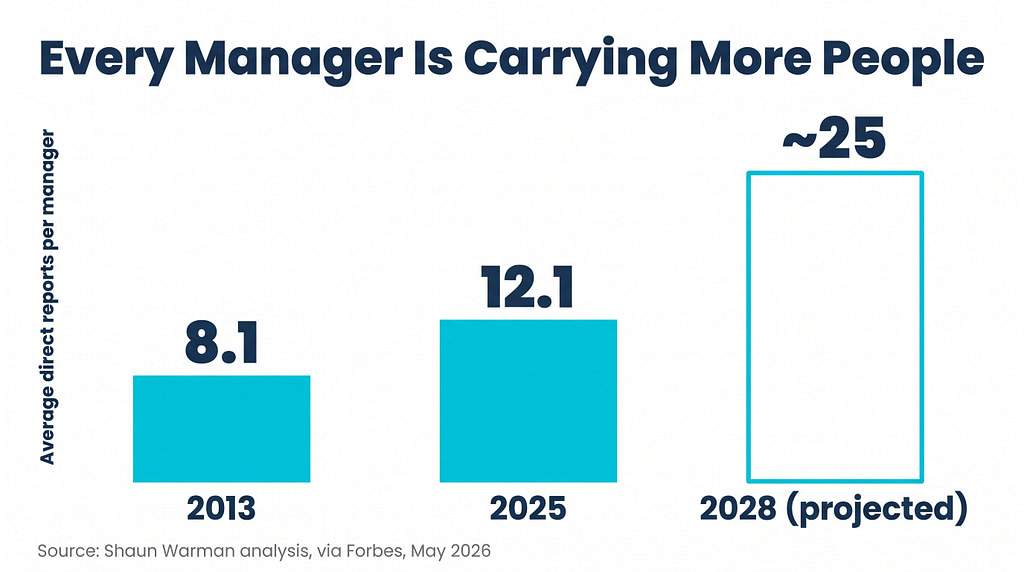
So if you feel disconnected from what success looks like, quietly wondering whether you are working on the right things, that feeling is a symptom of the org you work in. The shape of the company is producing it. The question worth answering is what you do about it.
I have coached product leaders through exactly this, and I spent more than 20 years in product myself, including 11 at Sonos as it grew from 50 people to 1,500. Here is what works when the person above you cannot give you the time you need.
In this article
- Why is it harder to know what leadership wants right now?
- What do you do when your manager can’t give you time?
- How do you build a relationship with leadership above your manager?
- What should you actually get out of time with leadership?
- What if your manager and leadership aren’t aligned?
- How do you do this without your manager feeling threatened?
Why is it harder to know what leadership wants right now?
Because there are fewer people between you and the top, and the ones who remain are carrying more than they can hold. Flattening was supposed to speed decisions up. What it also did was stretch every remaining manager across more people and remove the layer that used to translate leadership’s intent into your day-to-day.
Your manager has less time for you, and with fewer layers, the alignment above them is shakier too. So the signal about what actually matters reaches you late, partial, or not at all. The old move was to wait for your manager to hand it to you. That move stopped working.
What do you do when your manager can’t give you time?
You build your own line of sight to what matters, instead of waiting for it to arrive through your manager. When the person above you is stretched or checked out, your job quietly changes. You become the person who creates stability and finds the signal, and that is a real part of building influence without being in every room. It starts with getting close enough to leadership to hear, directly, what they care about.
How do you build a relationship with leadership above your manager?
Ask your manager to set it up, and frame it as wanting to understand the business. The move is to go with your manager, not to slip past them. Ask your manager to make the introduction or set up time with their manager, and say plainly that you want to understand what leadership cares about so you can aim your work at it. Most managers will back that, because it makes you more useful to them.
If you are new in a role, do this at the start and put it on a regular cadence, monthly or quarterly. Establishing the relationship early sets a precedent, so it reads as a normal part of how you operate. That timing takes the threat out of it before it has a chance to become one.
What should you actually get out of time with leadership?
A clear read on what success looks like and what matters to the business, straight from the person who decides it, which is also how you learn to make the case leadership actually responds to.
One of my clients was in this exact spot at a Fortune 100 Enterprise company. Her direct manager kept blowing off their one-on-ones, and she felt herself drifting further from the business, unsure whether she was even working on the right things. Her skip-level, though, was someone who liked her and made time for her every month or two. Those conversations did something specific: they reassured her that she did understand what mattered to the business, even when her own manager had gone quiet. She stopped guessing.
What if your manager and leadership aren’t aligned?
Read the gap, use it to navigate more carefully, and keep it to yourself. In those same conversations, my client noticed something else. There were places where what her manager thought mattered and what the skip-level actually valued did not line up. Knowing about it early let her move through those areas more gracefully, making choices that held up with the person whose opinion carried the most weight. She did not announce the gap or play the two of them against each other. She used what she knew to make better calls.
How do you do this without your manager feeling threatened?
Make sure your manager comes out of it looking good. Always. The worst versions of reaching up are the ones your manager reads as a threat, and that is the fastest way to damage the relationship you most need. Whatever you learn, whatever you say in that room, your manager’s standing should be stronger afterward. Credit them. Bring back what you learn and use it to make the team sharper. Once your manager can see that your time with leadership makes you a better contributor to their goals, it stops being a risk and becomes something they want for you.
Done this way, reaching up is one of the most loyal things you can do.
If you are working out how to read the people above you and manage up well while your org keeps reshaping itself, that is exactly the work I do with product leaders. Book a call.